
Which restaurant are we going to?
A Franchise.
I have always had this rule of supporting local, but in reality I use the phrase as a cover. To show that I am loyal. That I back my own.
In truth I only choose Alshaya group or franchise. And this went on for years. Even today I choose franchise.
I mentioned it before in the blog post on 48. What you get with a franchise is consistency. If a franchise is awful it will be consistently awful. If it is good it will be consistently good. Local restaurants, especially the small ones, are not and never will be consistent or reliable.
As we speak this is part of me that is changing. Not only with coffee roasters and coffee shops am I choosing local, but restaurants too.
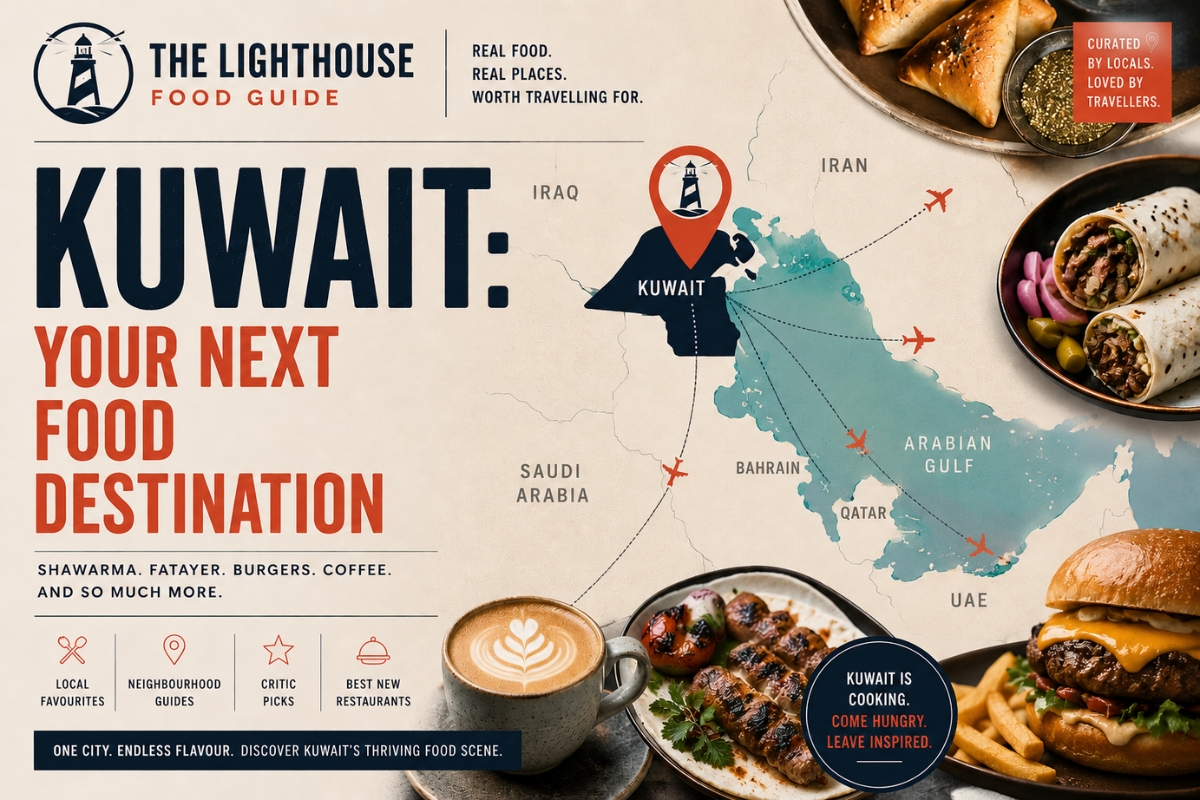
Kuwait in the past five years has grown into one of the best countries in the region for food. Famous travel food writers have said it, not just me. And as we come close to the end of summer, watch your next zwara. Listen to the ones who went to Marbella this year, or somewhere else in the region, and how they missed the shawarma, the fatayer. Even sandwiches and burgers have become excellent.
So now I will admit it. We are almost there.
Yes, still no Michelin. But the way Michelin arrives is not what most people think.
Michelin does not come to a restaurant. It comes to a country. The guide has to cover a place before any restaurant in it can be considered at all. Abu Dhabi and Dubai are on their fourth editions. Doha launched in 2024 and now has three starred restaurants. Saudi Arabia received its first guide in December 2025, covering Riyadh, Jeddah and Al-Ula.
Kuwait is not on the list.
So you could open the best restaurant this country has ever seen and cook at a two-star level for ten years and receive nothing. Not because you failed. Because nobody came.
And no, restaurants do not pay for stars. That confusion comes from two separate things being mixed up. Michelin partners with a country’s tourism authority to bring the guide there. Saudi’s launch was done with the Culinary Arts Commission. That is the arrangement that gets the guide into the country. The stars are decided separately, by inspectors who dine anonymously, pay their own bills, and return more than once.
Look at how independent it is. Saudi’s first edition: fifty-one restaurants selected, eleven Bib Gourmands, and no stars at all. In a country that had every reason to want that headline, the inspectors awarded nothing and said stars would be considered next year.
And you do not need marble and chandeliers. Michelin judges the plate. Their guides include street food alongside tasting menus.
They judge on five criteria. Quality of ingredients. Mastery of technique. Harmony of flavours. The chef’s personality in the cooking.
And fifth: consistency over time. Across the menu, and across separate visits.
Which is the exact word I have been using as my excuse for twenty years.
I was not being lazy. I was applying a real standard. I was just applying it as a reason to stay away, instead of as the thing that needed to change.
And it has changed.
Which is why I have been thinking about writing a Blueprint for tourism. Then I looked at what tourism actually requires from a country and decided we are not ready for that conversation yet. Hotels, transport, visas, things to do on the second day. That is a long list and most of it is not built.
But food is different. Food is the one part of it we already have, and it arrived without a strategy, without a ministry, and without anybody announcing it. It just happened, restaurant by restaurant, over five years.
So maybe a short one instead. A food Blueprint. Not tourism. Just the piece of the economy that is already working, and what it would take to make it count.
Because that is the point of a guide arriving. It is not a trophy. It is a country becoming somewhere people travel to eat.
So no, we do not have a Michelin star. We do not have the inspectors either, which is the more useful problem, because that is the one somebody can actually go and fix.